

Strengthening cultural connections through Indigenous Studies
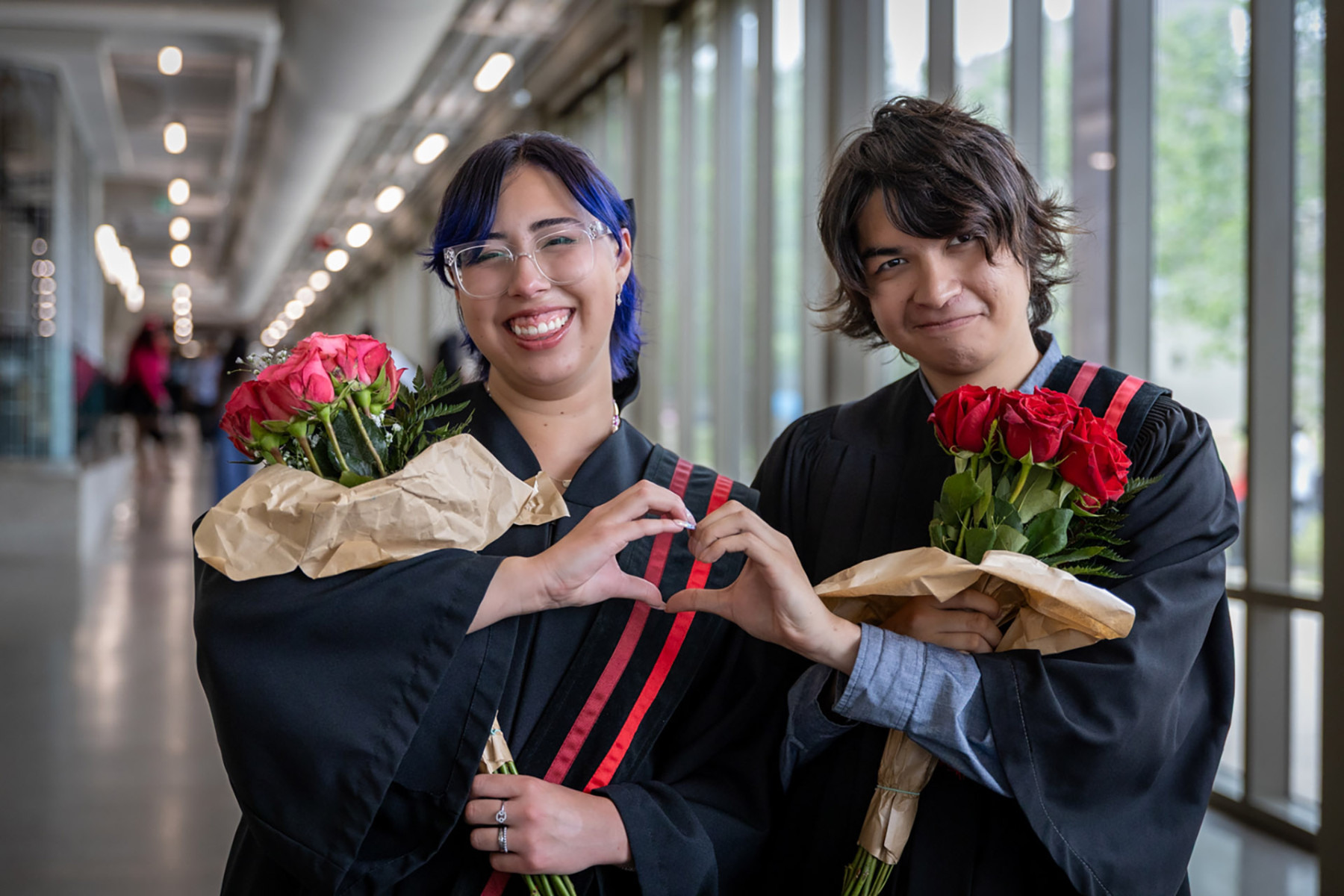
When Draden Etherington Spence first arrived at Mohawk College, he wasn’t quite sure where his path would lead. Influenced by his aunt who was pursuing a career in nursing, he tried pre-health and personal support worker, but realized the healthcare field was not for him. After briefly trying the accounting program too, he shares, “I was kind of having a bit of a crisis.” That changed when he discovered the Indigenous Studies 2+2 program.
“[The program] immediately piqued my interest because I've always wanted to go to university. I was pulled in by the fact that a lot of the courses were Indigenous-focused,” says Draden, a member of Swampy Cree First Nation. “Personally, I wasn’t as connected to my culture as I [would like] to be, so this was a great opportunity.”
Learners who complete Mohawk College’s two-year General Arts & Science program through the Indigenous studies stream are eligible to apply to an Indigenous Studies degree program at McMaster University and Wilfrid Laurier University through the college’s 2+2 pathway. Successful students earn both a diploma and a degree in four years.
Draden is one of two Mohawk College class of 2025 graduates who is preparing to take the next step in the 2+2 program: transferring to McMaster University this fall to continue his Indigenous Studies degree. Alongside him is fellow General and Arts Sciences graduate Lotus Geerts, Mohawk Wolf clan from Six Nations of the Grand River, an artist and aspiring educator.
A supportive family
For both Draden and Lotus, Mohawk College wasn’t just a place to earn credits it was a place to strengthen connections to their identities and community.
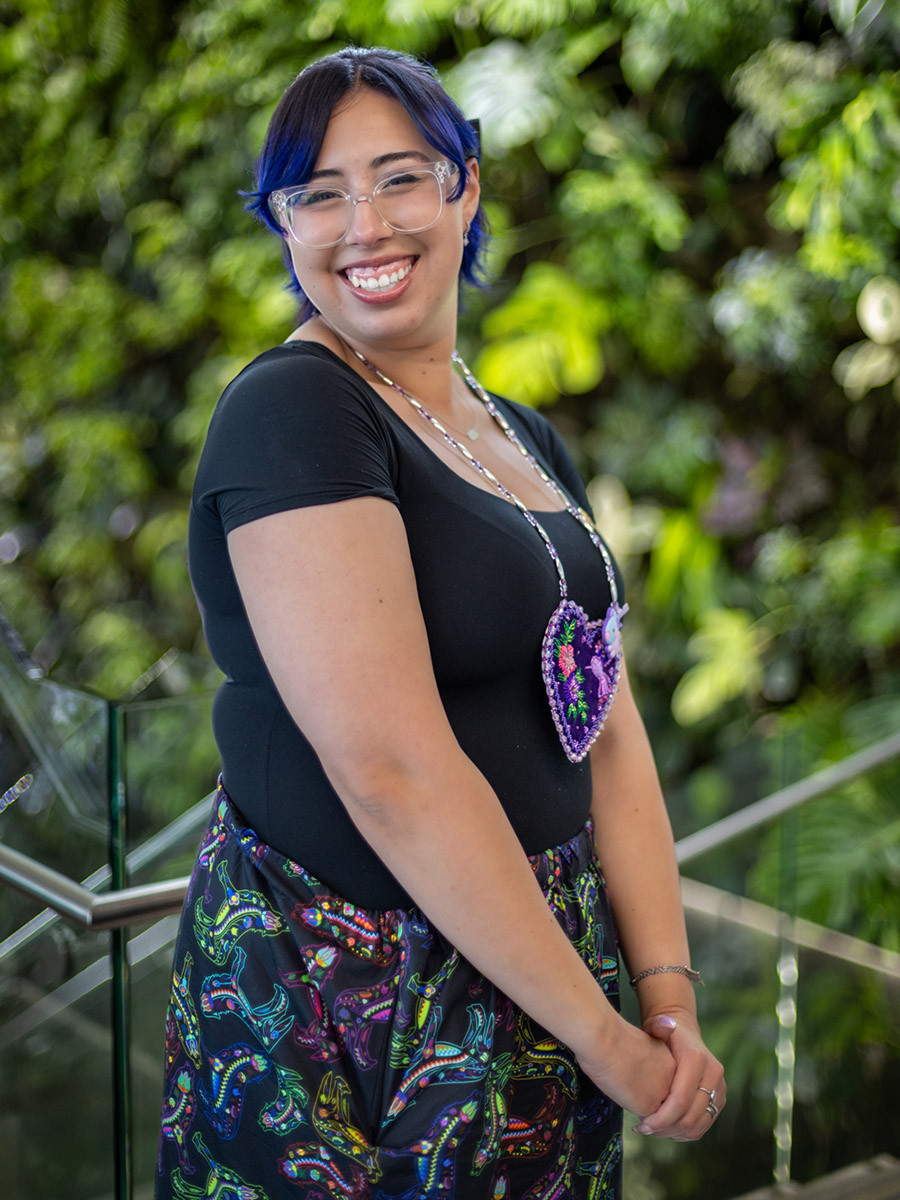
Lotus, who comes from a family of Indigenous educators has spent years assisting her mother in classrooms in Grand Erie, teaching their culture through art and storytelling. “I've always been interested in Indigenous education. That's because I come from a long line of Indigenous educators. Most of my family is in Indigenous education including my mom, my grandma, my aunt, my uncle, pretty much everybody on my native side,” she says. The Indigenous-focused General Arts & Science stream allowed Lotus to strengthen and expand upon the knowledge she already had.
One of her favourite classes was Indigenous Peoples Evolving Media & Artistic Images, which focused on the representation of Indigenous people in media over the past few decades. Lotus particularly liked that she got to analyze a favourite modern show, Reservation Dogs. “[The course] was so cool, and I had so much fun especially as it got into the 80s and onwards because you can see such a big shift in how Indigenous Peoples were previously portrayed to how they are portrayed now—which is luckily in a better way,” she says. “But there's still more to do.”
For Draden, the highlight was his Indigenous languages class. “I always thought Indigenous languages were mostly the same with minor differences. But Mohawk, Ojibwe, Cree—they're completely different. It was eye-opening.”
Both students say one of the most important aspects of their college experience was the Indigenous Student Services (ISS) space at the Fennell campus.
“I was there almost every day. I loved it, it had such a big feeling of community,” says Lotus. Whether it was to grab a snack or stop in for quick chat, Lotus relied on the space. “It was nice to just be able to sit at a table with a whole bunch of other Indigenous students and feel like you're surrounded by your cousins just hanging out at the kitchen table, crafting and talking about literally anything for hours.”
Draden agrees, “The staff were so friendly and helped me in every way—academically and personally.”
Both Draden and Lotus also had the opportunity to travel to Hawaii for a two-week Global Learning Opportunity trip through Indigenous Student Services & Centre for Indigenous Relations, Knowledge & Learning. The experience allowed the students to learn about the culture, diversity and history of the people. “It was a really rich and enlightening experience, and honestly, a once in a lifetime experience,” says Draden. “I met some of my best friends [on that trip], including Lotus.”
That sense of belonging ISS provided Lotus and Draden gave them the strength and confidence to continue on to McMaster. And knowing they’ll be doing it together helps ease the transition.
Looking to the future
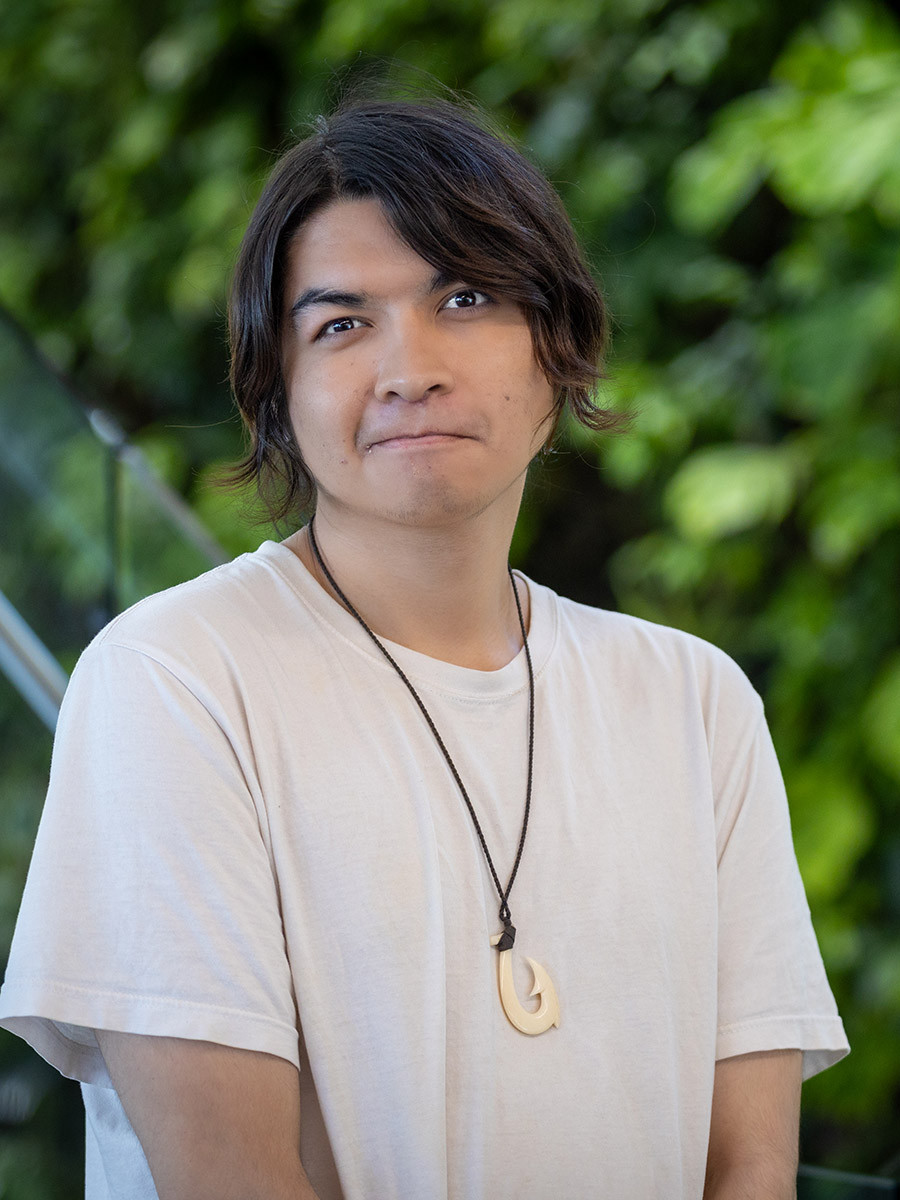
Draden has big dreams. He wants to become an author and write stories where Indigenous people and their culture are “represented in a casual way.” “This whole program has given me a lot of insight into how our people behave, especially because there are [many] different Indigenous groups. Just because I'm part of one, a whole different group might do things completely different, and that's completely fine,“ he explains. “I think learning more about our culture gives me more credibility when it comes to stuff I want to do in the future.”
Draden would also like to help other Indigenous people similarly to how he was supported and helped at the college.
Lotus sees herself continuing the work her mother does, bringing their culture into classrooms across Southern Ontario. “We've gone into a class a year later and [the students] still remember Mohawk words we taught them or our creation story. It's cool. I love that feeling of being able to teach my culture to the next generation,” she says.
Further into her educational journey is Stone Rose Rivers, a member of Mattagami First Nation and a recent graduate of McMaster University. Stone completed the same 2+2 program Draden and Lotus are in the middle of and will be continuing her education through McMaster’s Indigenous Studies Master’s program this fall. Stone’s path to education was winding, returning to school at 50, after losing her job.
She credits her success at McMaster to her start at Mohawk. “Had it not been for Mohawk, I don't think I would have had the skill set to succeed at McMaster,” she says. “Mohawk College just gave me the skills to be able to handle the workload with time management and how to interact with professors. It helped me understand how to write a paper, how to research, how to cite—all of these things that you need when you go to university.”
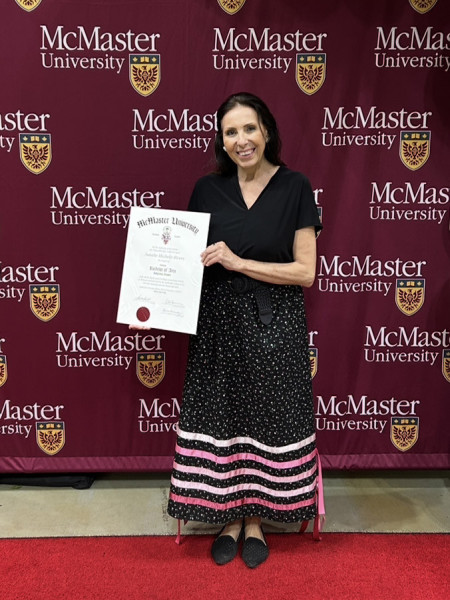 Stone is also a recent graduate of the Gladue Writer program, certified to prepare pre-sentencing reports to courts considering the unique systemic and background factors of Indigenous offenders when sentencing. She hopes to apply this certificate to her master's degree work which will be focused on prison research with a goal for a career focused on restorative justice. "It's the 2+2 program that brought me all of these amazing opportunities,” she says.
For those thinking of applying to the program, the recent Mohawk College graduates offer this advice, “If you are wanting to learn more about Indigenous people and how you can support them, learn how you can make them feel seen and represented, I would say 100% go for it,” explains Draden. “This program is very enriching in terms of what it has to offer. There are so many things that I thought I knew about Indigenous folks and Indigenous culture that I completely did not."
Lotus adds for those enrolling, “Get outside your comfort zone, because you'll have so much more fun. Even if you're scared, just go to the events. You'll end up finding people to hang out with. [Indigenous Student Services] is a great place to meet new people. One day you'll be meeting another random student and soon they’ll be one of your closest friends.”
The Indigenous Studies 2+2 program is more than a college diploma and university degree, it’s a path to community and enriching experiences.