

Then and now - Varsity volleyball
Read time: 7 min
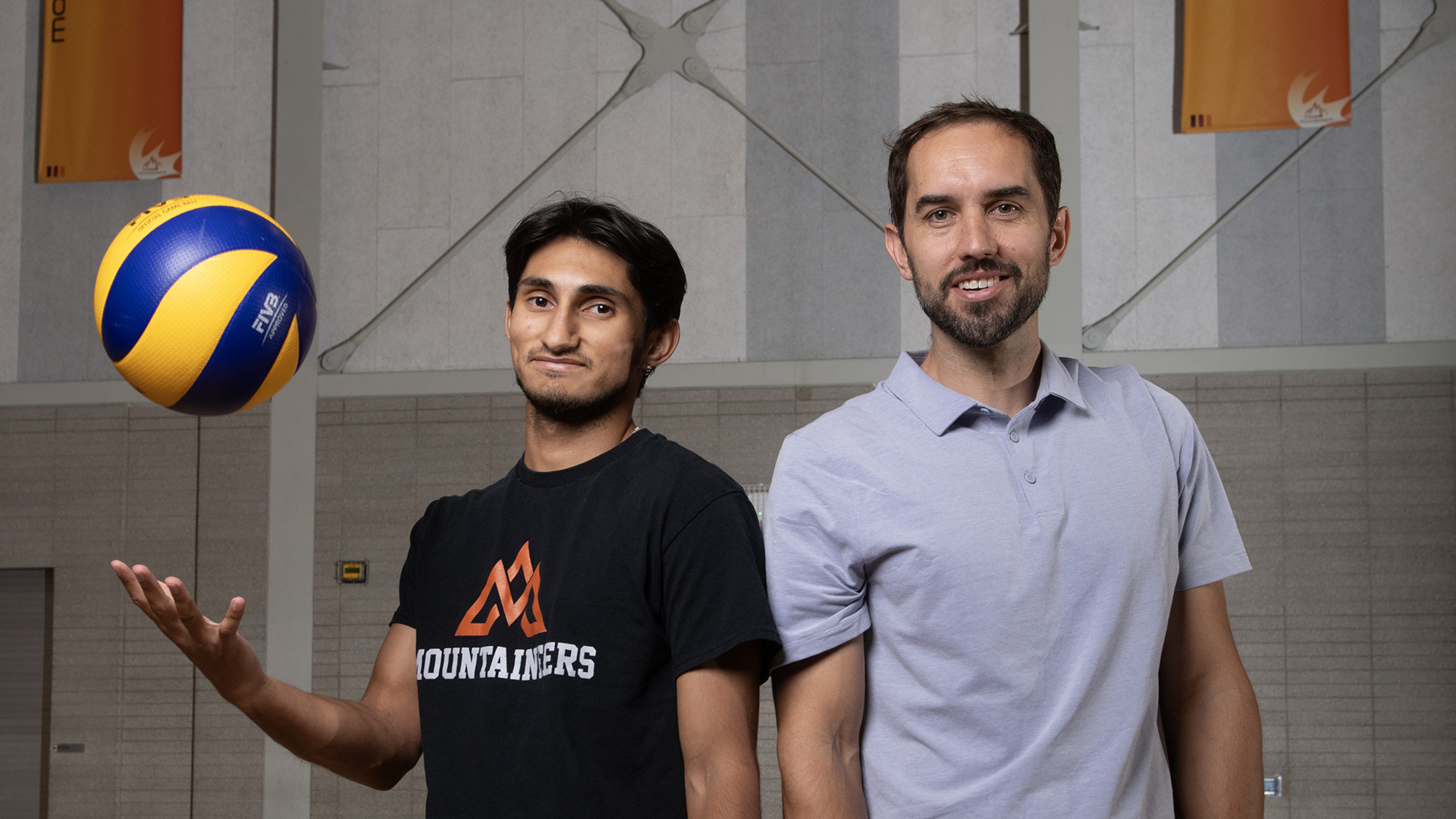
In this second Q&A in the series, Momentum invites a Mohawk College alumnus to speak with a current student to share advice, wisdom and understanding of how things change and how they stay the same. In recognition of the college’s focus on building success in its Athletics department, former MVP volleyball player (2003-2008) and Hall of Fame member Peter Sniuolis, who graduated from Architectural Technology in 2007 and then earned a Mohawk-McMaster Bachelor of Technology, speaks with current varsity player Turner Neame, who started at Mohawk in 2020. He has finished a two-year Construction Engineering Technician – Building Renovation program and is playing his third year on the volleyball team. He is an OCAA and CCAA all-pro academic player and plans to seek his Red Seal as a carpenter.
Peter to Turner: What was it like to be on the team during COVID?
That was my first year on the team. We had a full pre-season but then got shut down. We did Zoom calls online as a team and played online video games together. We really got to know each other and then in the second semester, it was crazy. We played nine games in four weeks and we had quick playoffs. If anyone had any symptoms they had to wear masks on the bench but not on the court. Some practices we had to wear them, too.
Peter to Turner: What kind of equipment do you have access to?
Matt Ferreira, our athletics director, is pushing a culture of excellence. We have two full ball carts, a serve machine and our weight room is amazing. We just got new Mountaineers jerseys with new colours and the gym floor was repainted with the new branding. We have a varsity change room, an athletic lounge where athletes can study and have access to massage therapists and trainers.
Last year, at the start of the season we had a mental coach who talked to us about handling stress and on-court regulation. Those tips and tricks were definitely helpful, especially for first-years who are coming from high school or club volleyball. The mindset of excellence we have now isn’t all about winning, but always striving to win.
Turner to Peter: What was the equipment like during your playing time?
We had six balls in my initial year, including one that wasn’t round and had the outside peeling off, and we played in rejected Team Canada jerseys that were too big for us. Back then we didn’t have a serving machine, so we all have bad shoulders now because we were our own serving machine. Definitely didn’t have access to the resources that are currently available.
Turner to Peter: What was your record?
In my five years at Mohawk, I think we lost about six league games. We had a strong team every year and we pushed for provincials and nationals each season. We medalled once at nationals. This success can be attributed to our coach, James Bradley who shaped us into a perpetual championship team.
Peter to Turner: How is your team looking this year?
We came fifth last year and fourth the year before that. We are definitely going in the right direction with our program and our team. We are looking for a medal this year. We have five recruits this year who are looking solid. We have a decent number of veterans, which leaves the rookies time to get better. We know Humber College is going to be good, they always are. Fanshawe College is going to be good. They have a five-year setter who has come back for his last year after being CCAA player of the year. We lost both setters after the COVID year so I had to step in to be a setter. I’m only 5-foot-8, so blocking wasn’t fun. I’m now a libero, a back-row defensive specialist.
Turner to Peter: Do you keep in contact with your teammates?
We were and still are extremely tight. I have a small family, and when I was getting married I invited about 25 people to the wedding, all from volleyball. We still go to the cottage together, we play rec volleyball, softball, and continue to do things together. They are probably my best buddies. You’ll never lose contact with these guys. You’ll be groomsmen at each other’s weddings and
there for each other when you have kids. That was the greatest benefit of playing team sports in college.
Turner:
We are great friends and I think COVID made that even stronger. I was a groomsman for our team captain from last year. His groomsmen were all volleyball guys. Does that friendship help you on the court?
Peter:
I think it was the key to our success. We were always a smaller team but a lot of it came down to how close we were and how we played as a team. That relationship definitely allowed us to win games we shouldn’t have.
Turner to Peter: How did sports impact your career?
I ended up as a Professional Engineer currently with the roads department at the City of Hamilton. Sports have been huge for me. My time there has gone a long way in the real world helping me understand people and how they work. Some people need constant reinforcement, others don’t. Some people need you to scream at them, others need a pat on the back.
Wherever you work you are going to be part of a team. Through sports, you learn to relate to people and how to talk to people. I was a quiet person before volleyball, but that changed after the first year. The intangibles you don’t get in school, you get in sports. You learn to work with people who are different than yourself. You can’t teach it, you learn it.
Peter to Turner: What has volleyball taught you?
There will always be conflict. You have to get over it quickly and problem-solve quickly and move on from it. I was also quiet in first year but I found myself being a veteran in second year. I had to step into a role of leadership and help guide new people. That was good for me.
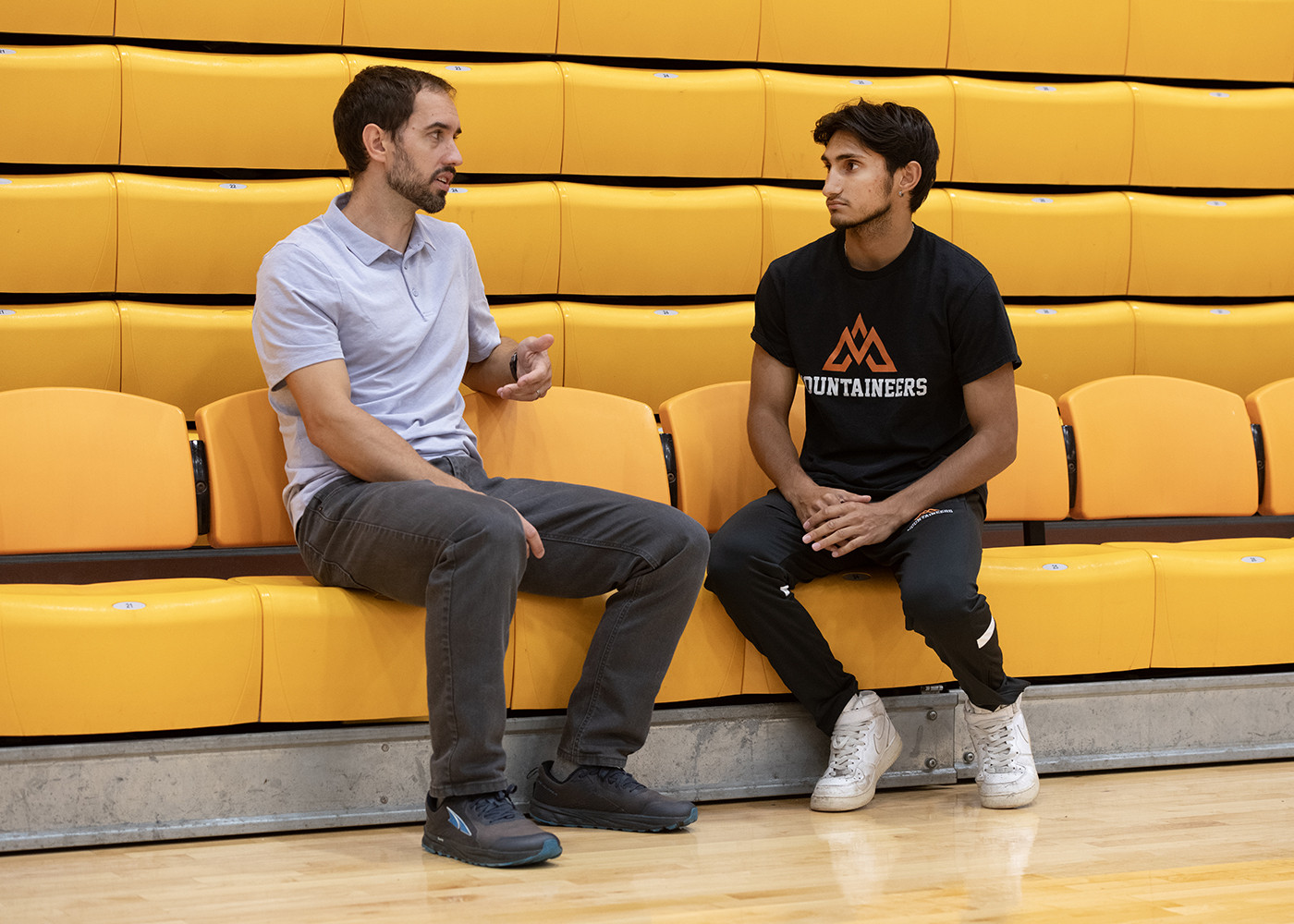
How did you each manage the commitment of varsity sports with a college workload?
Turner:
You are so busy that you have to be efficient and take any time you have to keep up on your work. I did lighten my course load last year so I didn’t drown. Making lists and taking time on the bus (on the way to games) to do readings has really helped me. I use the athletic lounge to do some work in a quiet space.
Peter:
I knew I wanted to go into the BTech program so I had to work a bit harder to get my grades up following my first year. You give up a lot as a student athlete. We practised from 10 p.m. to midnight and then
I was back up for an 8 a.m. class. There’s definitely sacrifices you make, but you gain friendships and social aspects through the team considering we’re always together. It was all worth it.
Turner to Peter: What was the old rec centre like?
We loved playing there. The roof was lower than it is now and there were stands only on one side. It was a great facility. But to see how far it’s come with the David Braley Athletic and Recreation Centre facility now, is really cool. The resources available to students is something I wish we had. Hopefully, we played a small part in pushing things in that direction.
How about the fan support?
Peter:
So in my first year, I remember the BlackBerry Bold with a screen for text messaging was just released, so we could text, which was strange. There was no social media and you had to build relationships in person. I’m happy that none of that was around when I played. I’m not a social media guy now so I think (all the social media attention on athletes) may have been a challenge for me. We had loyal fans come out to all of our games and lack of social media contributed to that. We didn’t need as many fans to come out to fill the gym and make it exciting.
Turner:
I don’t use social media much either but I do love the highlight videos the Athletics department produces. It’s pretty cool to see them after a game. A lot of students now watch the games on livestream so there isn’t a crazy amount of fans at the games, other than parents and other athletes. But definitely, during playoffs, the gym is packed. It’s a big gym, so there is a lot of space to fill.
Turner to Peter: How was your transition from being a student to working?
My biggest advice is to remember you are a student first and an athlete second. If you do well in the classroom, you’ll play better and you set yourself up for success. It’s very difficult to play volleyball professionally, so the chances of making a living are slim, but you will make a living based on your academics. Sometimes it’s about finding something you don’t hate to do, rather than what you love to do. I studied engineering, became a Professional Engineer, and ended up initially designing roads and bridges and quickly found out it wasn’t for me. Now I’m in roadway maintenance and I enjoy it. Also, take care of your body now. My knees are giving out on me at 39 – it catches up to you.
This story originally appeared in Momentum Magazine.